Slot Paylines, Win Systems and How Payouts Form
Every online slot uses a system to determine whether a spin results in a win. In traditional games, that system is slot paylines — fixed paths across the reels where matching symbols must land. In modern games, paylines have been supplemented or replaced by ways-to-win systems, cluster pays, Megaways mechanics, and expanding reel structures that can produce hundreds of thousands of possible winning combinations per spin.
Paylines and wins: choose the right path
Use this page as a route map, not a link dump. Pick the path that matches the decision you are trying to make right now.
- Basic wins: Read what paylines are before comparing modern win systems.
- Symbols: Use slot symbols and scatter symbols to understand feature triggers.
- High-ceiling games: Use max win slots explained and highest max win slots without treating max win as probability.
Understanding how these systems work is essential because they directly affect your cost per spin, your hit rate, and the shape of your session. A 243-ways game behaves differently from a fixed 20-line game, which behaves differently from a Megaways game with up to 117,649 ways. The guides in this section break down each system so you can read any paytable and know exactly what you are looking at.
If you are new to online slots, start with How Online Slots Work for a complete foundation. If you already understand the basics and want to go deeper into specific win mechanics, browse the guides below.

Highest Max Win Slots: 22 Games Ranked by Realistic, Extreme, and Theoretical Tiers

What Is a Max Win in Slots? Everything Bonus Hunters Need to Know
Max Win Slots Explained: What “10,000×” Really Means & How Max Wins Work

Ways to Win Slot Games Explained: From 243 Ways to Megaways™
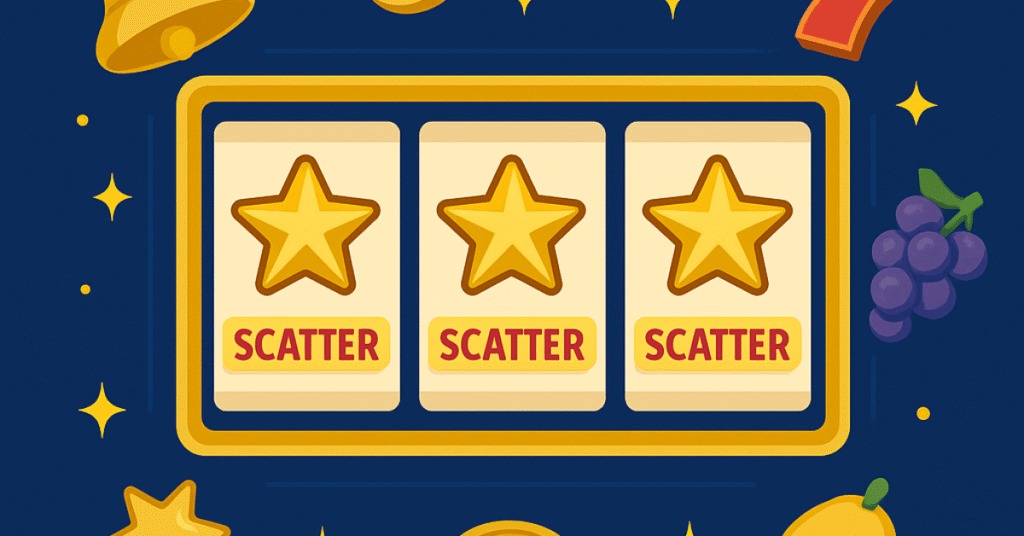
Scatter Symbols in Slots: How They Work & Why They Matter
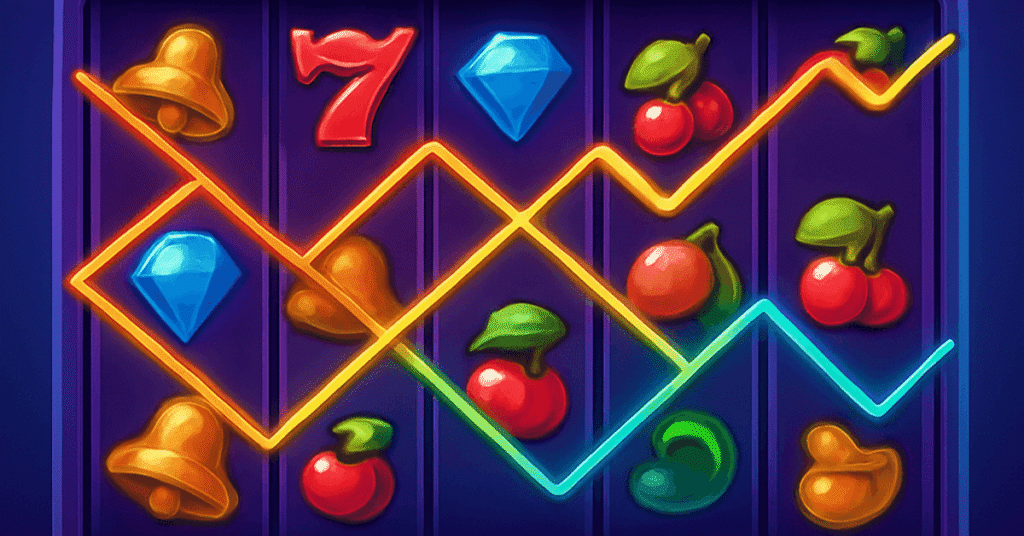
Paylines in Slot Games: 5 Crucial Facts Every Player Must Know
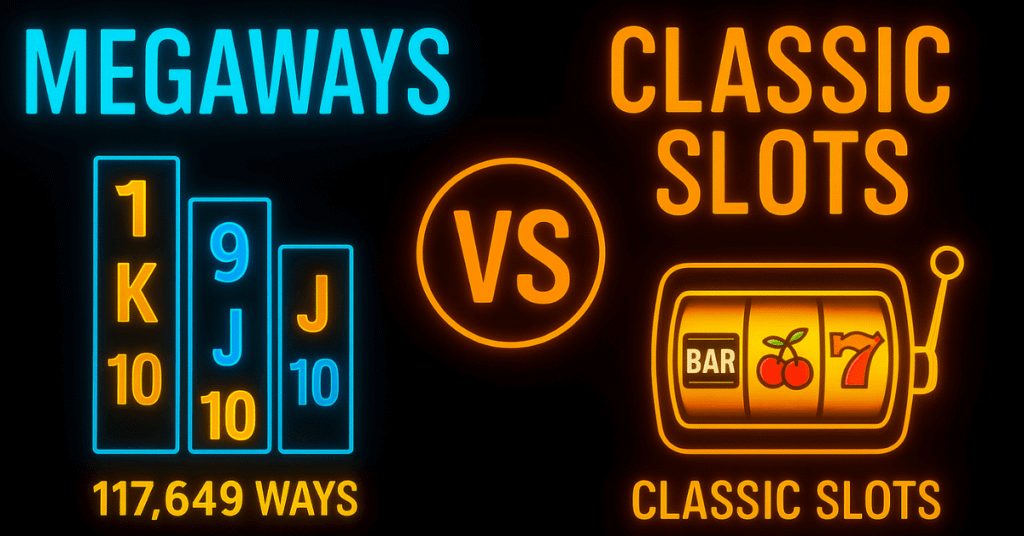
Megaways vs. Classic Slots: What’s the Difference & Which Should You Play?

RTP in Slots: 5 Essential Facts That Save You Money on Every Spin
How Slot Paylines Work
Slot paylines are the predefined patterns across the reels where matching symbols must appear for a spin to count as a win. A classic three-reel slot might have a single horizontal payline. A modern five-reel video slot can have 10, 20, 50, or even 100 fixed paylines running in zigzag patterns across the grid.
Paylines in Slot Games is the core guide for this topic. It covers how fixed and adjustable slot paylines work, how the number of active paylines affects your cost per spin and win frequency, and why adjustable paylines — where you can choose how many lines to activate — have largely disappeared from modern slot design in favour of fixed-line and ways-to-win systems.
The key principle is simple: more active slot paylines means more chances to win per spin, but also a higher total bet. A 50-line slot at €0.01 per line costs €0.50 per spin. The same game at 10 active lines costs €0.10 but significantly reduces your hit rate. Most modern games fix the number of paylines precisely to avoid this trade-off — you always play all lines, and the cost per spin is set by the game’s minimum bet structure.
Beyond Slot Paylines: Ways to Win and Alternative Systems
The biggest evolution in slot design over the past decade is the move away from traditional slot paylines toward systems that pay based on symbol positions rather than fixed line patterns. These systems increase the number of potential winning combinations dramatically — from dozens to hundreds of thousands per spin.
Ways to Win in Slots explains the major alternatives. In a 243-ways game, any matching symbol on adjacent reels from left to right counts as a win — no specific line pattern required. A 1,024-ways game expands this to a 5×4 grid. The guide covers how each system calculates wins, how it changes the cost-per-spin model, and what it means for volatility and session feel.
Cluster Pays, Expanding Reels and Ways to Win goes further into the modern formats. Cluster pays systems award wins when groups of identical symbols touch horizontally or vertically — no reels, no paylines, just clusters. Expanding reel systems change the grid size dynamically during play, sometimes growing from 5×3 to 5×7 or beyond during bonus rounds. Both formats break the traditional slot paylines model entirely and create different risk and reward profiles.
Megaways vs Classic Slots directly compares the Big Time Gaming-licensed Megaways mechanic against traditional fixed-line formats. Megaways games randomize the number of symbols per reel on every spin, producing anywhere from 324 to 117,649 ways to win. This creates extreme volatility in the win-frequency itself — not just the payout size. The guide explains when each format suits different player profiles and bankroll sizes.
Slot Symbols That Shape Your Wins
Slot paylines and win systems define where a win can happen. Symbols define what triggers it and how much it pays. Understanding symbol types is the other half of understanding how wins form in any slot.
Slot Symbols Explained is the comprehensive reference. It covers every symbol type you will encounter: standard pay symbols (the regular icons that form winning combinations), wilds (which substitute for other symbols to complete wins), stacked wilds (which fill entire reel positions), expanding wilds (which grow to cover adjacent positions), and multiplier symbols (which increase the payout of any win they participate in).
Scatter Symbols in Slots focuses on the most important special symbol type. Scatters are typically the trigger for bonus rounds, free spins, or other special features — and unlike regular symbols, they usually pay regardless of slot paylines or position. Landing three or more scatters anywhere on the reels activates the feature. The guide explains how scatter mechanics work across different game structures, how scatter values are calculated, and why the scatter trigger is the most important event in high-volatility slots where the bonus round contains the majority of the game’s RTP.
Max Win and Jackpot Mechanics
Every slot has a ceiling — the maximum amount a single spin or bonus round can pay out. How that ceiling is set, and how realistic it is to reach, varies enormously between games. These guides cover the mechanics behind the numbers that appear in every slot’s marketing but are rarely explained properly.
Max Win Slots Explained covers how max win caps work in non-jackpot slots. When a game advertises a “10,000× max win,” it means the theoretical ceiling is 10,000 times your bet. But that number tells you nothing about how likely you are to reach it, what combination of mechanics produces it, or what the realistic range of bonus round outcomes actually looks like. The guide breaks down how studios set these caps, why higher ceilings correlate with higher volatility, and how to use max win data when comparing games — particularly for bonus hunting.
What Is a Max Win in Slots covers the same topic from a bonus hunter’s perspective — what the max win number means for expected value calculations, how it interacts with volatility, and why a 50,000× cap on an extreme-volatility slot is a fundamentally different proposition than a 5,000× cap on a medium-volatility game.
Jackpots in Slot Games covers the other ceiling model — progressive and fixed jackpot systems. Progressive jackpots grow over time as a fraction of every bet across a network of players feeds into the pool. The guide explains seed values, contribution rates, how jackpot pools accumulate, and why jackpot slots typically have lower base-game RTP than non-jackpot games. It also covers the mechanics behind the largest online slot payouts in history, as documented by sources like Guinness World Records.
How Slot Paylines Connect to RTP and Volatility
The win system a slot uses is not independent of its mathematical model. Slot paylines, ways-to-win structures, and cluster pay systems all interact with RTP and volatility to produce the session experience you actually feel as a player.
A 243-ways game has more winning combinations per spin than a 20-line game, which typically means a higher base-game hit rate. But that does not necessarily mean better returns — the individual win amounts are usually smaller to compensate. The total RTP can be identical; the distribution of that RTP across your session is what changes.
Megaways games illustrate this most clearly. With up to 117,649 ways on a single spin, the potential for large multi-way wins is enormous — but the base-game return on most Megaways titles is deliberately low, with the majority of the RTP concentrated in the bonus round. This is the same redistribution pattern described in How Slot Features Affect RTP. Understanding how slot paylines and win systems interact with this redistribution helps you set realistic expectations: a Megaways game will feel very different from a 10-line classic even if the published RTP is the same.
For a practical way to see how these dynamics play out, the Slot Volatility and RTP Calculator simulates 200 sessions at your chosen RTP and volatility level. The Session Risk Analyzer models your bust probability based on your bankroll, bet size, and the game’s risk profile. Both tools help you translate the theory behind slot paylines and win mechanics into concrete session planning.
How to Use This Knowledge When Choosing Games
Understanding slot paylines and win systems is practically useful when selecting games. Here is how to apply it.
If you want frequent small wins and longer sessions — Look for games with fixed slot paylines (20 to 50 lines) or 243-ways systems. These typically have higher base-game hit rates and lower volatility. Games from studios like NetEnt and Playson often fall into this category.
If you want high max win potential and are comfortable with dry spells — Megaways games and high-ways slots (1,024+) tend to concentrate RTP in the bonus round with extreme variance. Games from Nolimit City and other high-volatility studios use these structures extensively.
If you want something different from traditional reel formats — Cluster pay and grid-based games like those from Shady Lady use entirely different win formation logic. Crash games abandon reels altogether.
If you are bonus hunting — Max win cap and bonus buy cost matter more than the payline count. Check our slot reviews for specific game data, and use the Bonus Hunt Tracker to log results as you go.
For free demos of games using every win system covered on this page, browse the free online slots library — filter by provider or mechanic to find specific formats. Before you play for real money, read the Responsible Gambling Guide and set your limits in advance.
Frequently Asked Questions About Slot Paylines
What are slot paylines?
Slot paylines are predefined patterns across the reels where matching symbols must land for a spin to produce a win. Traditional slots have a single payline; modern games can have 10, 20, 50, or more. Some games replace paylines entirely with ways-to-win or cluster pay systems.
Do more slot paylines mean more wins?
More active paylines increase the number of possible winning combinations per spin, which generally raises the hit rate. However, more paylines also increases the cost per spin, and the individual payout per win is typically lower to maintain the same overall RTP. More lines does not mean more profit — it means a different session profile.
What is the difference between paylines and ways to win?
Paylines require symbols to land on specific predefined patterns. Ways-to-win systems pay when matching symbols appear on adjacent reels from left to right, regardless of their position on the reel. A 243-ways game treats every position as a potential win path, which increases winning combinations but changes the payout structure. Ways to Win in Slots explains the full comparison.
How does Megaways work?
Megaways randomizes the number of symbols shown on each reel every spin, which changes the total number of ways to win dynamically — from as few as 324 to as many as 117,649 on a single spin. This creates extreme volatility in the win-formation mechanic itself. Megaways vs Classic Slots covers the full comparison.
What are scatter symbols and how do they relate to slot paylines?
Scatters are special symbols that typically trigger bonus rounds or free spins. Unlike regular symbols, scatters usually pay regardless of slot paylines — they can land anywhere on the reels and still activate their effect. Scatter Symbols in Slots explains the full mechanics.
Does the win system affect a slot’s RTP?
The win system does not change the published RTP, but it changes how that RTP is distributed across your session. A 243-ways game might return small wins frequently while a Megaways game concentrates returns in rarer large events — even if both have a 96% RTP. For the theory behind this, read How Slot Features Affect RTP.
Slot paylines are the foundation of how every slot determines a winning spin. Whether a game uses 20 fixed lines, 243 ways, 117,649 Megaways, or cluster mechanics, the principle is the same — symbols in the right positions produce a payout. Understanding which system a game uses, and how that system affects your cost, hit rate, and variance, is one of the most practical advantages a player can have.