Awaiting first spin.
Hit SPIN. Each of the 30 grid cells draws an independent integer 0–9999. The number's range determines the symbol — that's the complete RNG mechanic.
Every cell on the grid draws an independent random integer from 0 to 9,999. That number falls into a symbol's weight range — there is no hidden logic, no "hot" or "cold" streaks, no memory of previous spins. The table below shows exactly how numbers map to symbols.
| Symbol | Range | Probability | Bar |
|---|---|---|---|
| ☁ A Stone | 0–1699 | 17.0% | |
| 🏺 B Urn | 1700–3399 | 17.0% | |
| 🌿 C Fern | 3400–4849 | 14.5% | |
| 💎 D Lapis | 4850–6299 | 14.5% | |
| 🔮 E Orb | 6300–7399 | 11.0% | |
| 🗝 F Key | 7400–8299 | 9.0% | |
| 🧪 G Flask | 8300–9049 | 7.5% | |
| 👑 H Crown | 9050–9779 | 7.3% | |
| ⚡ S Scatter | 9780–9999 | 2.2% |
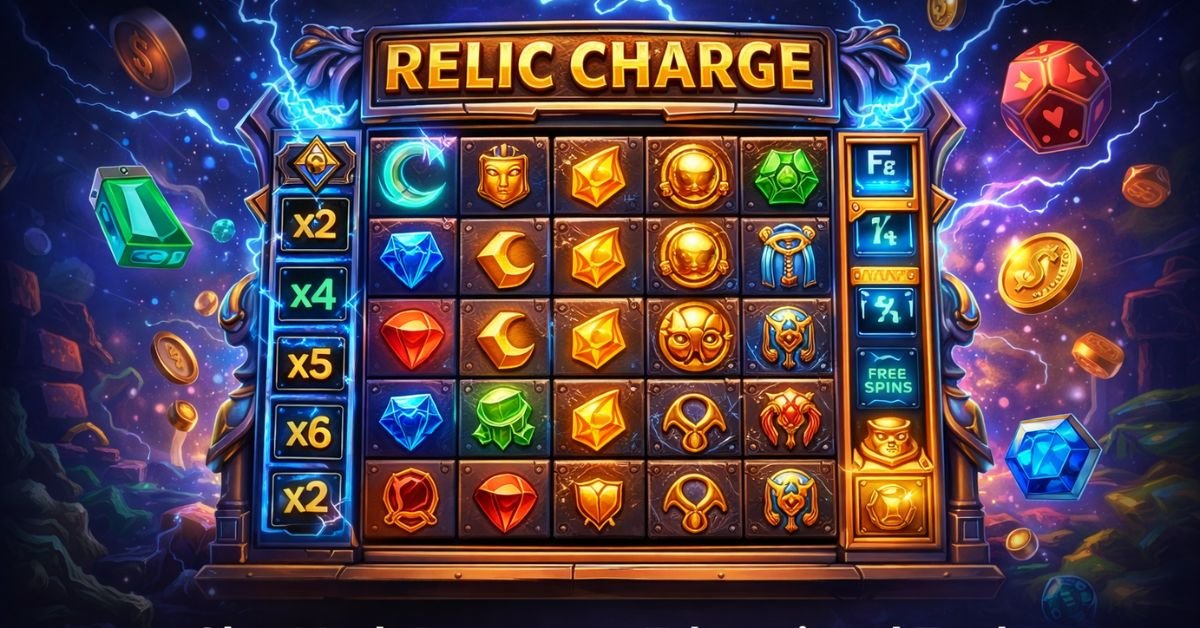
Relic Charge is a slot math prototype built to help players understand how slot games actually work
This slot math prototype is not positioned as a normal slot review, a casino offer page, or a throwaway demo. Its real value is educational. Relic Charge gives players a way to interact with a simplified but meaningful slot model so they can see how a base game behaves, how a bonus feature changes the session, how persistent mechanics affect excitement, and why short-term results often feel very different from long-run outcomes. In other words, this page is here to make slot design easier to understand through direct experience rather than abstract explanation alone.
The reason that matters is simple. Many people read about RTP, volatility, hit rate, bonus frequency, or how online slots work, but those ideas stay vague until they are seen inside an actual playable structure. A slot math prototype bridges that gap. Instead of memorizing definitions, you can watch how a tumble sequence develops, see how a free-spin bonus builds, test a seeded random sequence, and compare a small session with a much larger simulation run.
Relic Charge — Quick Tool Stats
The right way to use this page: do not think of Relic Charge as a game you are trying to beat. Think of it as a slot math prototype you are trying to understand. The value is in what it teaches you about structure, pacing, probability, and bonus design.
What this slot math prototype actually teaches players
The most useful thing about this slot math prototype is that it makes invisible design choices easier to see. In a real casino slot, most players only notice the surface layer: the theme, the wins, the sounds, and the feature animation. They may not notice how the base game has been tuned, how much of the expected return sits in the bonus, or why one bonus feels more memorable than another. Relic Charge slows that down and gives those ideas a more visible structure.
Base-Game Rhythm
You can test whether the base game feels alive or empty. That matters because a slot does not need constant wins to feel engaging, but it usually does need movement, anticipation, and enough activity to justify the next spin.
Bonus Pacing
You can see how often the feature arrives and whether it changes the entire session or simply adds a temporary spike. This helps explain why bonus frequency is so important to overall experience.
Long-Run Behavior
You can compare a few manual spins with larger simulated samples. That makes it easier to understand why a slot can feel hot, cold, generous, or brutal in the short term without those labels telling the full story.
For players, that is a meaningful shift. Instead of seeing slots only as entertainment products, the page helps you see them as designed systems. That does not make them less enjoyable. It makes them easier to read. And once players learn how to read them better, they usually make better decisions about expectations, bankroll management, and feature value.
Why this slot math prototype is more useful than a normal slot demo
A standard demo tells you whether a game looks appealing. A slot math prototype tells you more than that. It gives you a controlled environment where you can observe the relationship between gameplay feel and model behavior. That is an important distinction.
For example, a normal demo may let you notice that a game has free spins and multipliers. Relic Charge lets you go one step deeper and ask better questions: How quickly does the game reveal its identity? Does the base game do enough before the feature arrives? Does the feature simply pay more, or does it introduce a genuinely different state? Do the persistent multipliers create real momentum, or do they only look impressive on the screen?
Those are the questions that help players understand slot design at a more mature level. They also happen to be the same questions that matter when a provider or designer evaluates whether a model is working.
What makes Relic Charge a practical learning tool
- It has a readable base loop: you can quickly understand what a normal paid spin looks like.
- It has a visible feature transition: free spins clearly change the state of the game.
- It has progression inside the bonus: the column meters and multiplier growth make the feature easier to study.
- It includes simulation tools: you can compare feel with data instead of trusting feeling alone.
- It includes seeded RNG: you can repeat sequences and test behavior more deliberately.
How to use the slot math prototype properly
The easiest mistake is to click a few spins and assume you have understood it. A better method is to use the slot math prototype in stages. First, learn the rhythm. Then test the bonus. Then compare what you felt with what the simulation shows.
Start with the base game only
Ignore the simulator at first. Focus on how the game begins. Watch the first few spins, the tumble flow, and the spacing between meaningful events. Ask whether the slot creates enough anticipation before the feature arrives.
Pay attention to when the game becomes interesting
Some slots become interesting immediately. Others only become interesting once the feature triggers. Relic Charge helps you notice where that transition happens, and that teaches an important lesson about base-game value versus bonus dependency.
Study the free-spin state separately
When free spins activate, watch the column meters and the total multiplier. The bonus is not just “more spins for free.” It is a different state with its own progression logic. That is one of the clearest modern design ideas this page demonstrates.
Use the simulator after you have a feel for it
Run larger batches and compare the observed RTP, hit rate, trigger rate, and bonus distribution with your short manual session. This is where the educational value really increases, because you begin connecting feel with structure.
How this slot math prototype explains RTP, hit rate and volatility
Many players misuse these terms because they encounter them as labels instead of patterns. RTP sounds precise, but it often gets treated like a promise for a short session. Volatility sounds intuitive, but it often gets treated like a mood rather than a distribution. A slot math prototype helps make both ideas more concrete.
When you run Relic Charge manually, you may experience a dry sequence, a fast bonus, or an unexpectedly strong feature. None of that alone tells you the long-run return. But when you run the simulator, you begin to see how those session-level experiences fit inside a broader range of outcomes. That makes the concept of RTP much easier to understand.
The same applies to volatility. A volatile slot is not simply one that “feels scary.” It is a slot whose returns are distributed in a wider and more uneven way. Relic Charge makes that more visible by letting you compare ordinary spins with a bonus system that can escalate through persistent multipliers. The result is a better practical feel for why some slots feel smooth and others feel swingy even when the headline numbers look similar.
What players usually notice first
They notice whether they win, how often the feature arrives, and whether the bonus felt exciting. That is normal. It is the emotional layer of slot play, and it matters because the experience has to be engaging enough to hold attention.
What this tool helps players notice next
It encourages better questions: how much value sits in the bonus, how often momentum builds, whether the base game can carry the session, and how a persistent mechanic changes replay value compared with a flat feature.
How the bonus structure in this slot math prototype helps explain modern slot design
One reason Relic Charge works well as a learning tool is that its feature is easy to understand but still modern enough to be meaningful. The free-spin bonus includes persistent column progression, and that progression feeds into the total multiplier. This creates a feature that does not just pay in a larger way than the base game. It evolves.
That is important because many stronger modern slots rely on some version of this idea: persistence, accumulation, state growth, or progressive enhancement. When players can see those mechanics clearly in a slot math prototype, they start to recognize the same design language in commercial games. That improves reading ability. It also improves expectations. Players become less likely to confuse flashy presentation with meaningful progression, because they start recognizing what actually changes the model.
Questions worth asking during the bonus
- Does the feature feel stronger because of real progression, or only because of bigger payout moments?
- Do the column upgrades create visible tension and momentum?
- Does the feature feel too dependent on one lucky event, or does it build gradually enough to stay engaging?
- If you replay a seed or run a simulation, do the same structural patterns keep showing up?
Why seeded RNG makes this slot math prototype especially valuable
Seeded RNG is one of the biggest reasons this page rises above a standard demo. In normal use, random results are hard to compare because each sequence is different. With seeded mode, the same seed produces the same sequence. That makes the slot math prototype far more useful for learning and testing.
For a player, this means you can reproduce a sequence and watch it more carefully. For a designer or analyst, it means you can isolate variables more reliably. Either way, the educational result is the same: randomness becomes easier to study without pretending that the game is no longer random. You are not removing uncertainty. You are making observation more disciplined.
This is one of the strongest lessons on the page. Slot outcomes are random, but slot experiences are still shaped by structure. Symbol weights, feature rules, progression logic, and payout mapping all influence what that randomness feels like. A slot math prototype with seeded mode makes that much easier to see.
What this slot math prototype teaches players about real slots
Relic Charge is not meant to replace real slot play, and it is not meant to mimic every commercial game. Its purpose is to clarify the fundamentals that many real slots are built on. After spending time with this slot math prototype, most players should have a sharper understanding of several important ideas.
- why the first 10 to 20 spins matter so much to engagement
- why the base game has to do more than simply wait for the bonus
- why persistent features often feel more satisfying than flat features
- why short sessions can be misleading when people talk about RTP
- why feature frequency and bonus distribution matter as much as theme
Those lessons are practical. They make it easier to judge what kind of slot you are playing, what kind of session you are likely to experience, and what a feature is really offering. They also make it easier to understand the educational content elsewhere on SlotDecoded, because you are no longer learning those ideas in isolation.
If you want to go deeper after using the tool, the best next reads are our guides to Return to Player, slot volatility, slot symbols, and how slot features affect RTP. The theory usually lands much better once you have already tested the mechanics in a working prototype.
Who this page is really for
This page is best for readers who are curious about how slot games are structured but do not want a dry academic explanation. It is also useful for players who have heard terms like “RTP,” “variance,” or “math model” many times and want a more intuitive way to understand them. Finally, it has clear value for analysts, product-minded readers, or anyone building slot-related educational content, because it demonstrates how a compact slot math prototype can be turned into a useful explanatory tool.
That is also why the page should perform better as content than a thin demo page would. It has a clear purpose, a clear learning outcome, and a clear connection to the rest of your educational cluster.
Responsible gambling and further reading
Relic Charge is a learning tool, but the same core principle still applies: gambling-style mechanics are best approached with clear limits and realistic expectations. If you want support, safer-play guidance, or additional reading beyond SlotDecoded, these are useful external resources:
BeGambleAware · GamCare · National Council on Problem Gambling
Those outbound links also make this page more complete as a resource, because they point readers toward real support services rather than keeping the page closed in on itself.
Relic Charge Slot Math Prototype FAQ
Is Relic Charge a real casino slot?
No. Relic Charge is an educational slot math prototype designed to help players understand how slot mechanics, bonus structure, RTP behavior, and progression systems work in practice.
Why is this slot math prototype more useful than a normal demo?
Because it adds explanation, seeded RNG, simulation tools, and a clearer view of how the base game and bonus interact. It is built to teach, not just to entertain.
What should I focus on when I use the tool?
Focus on the rhythm of the base game, the timing of the free-spin trigger, the way the column multipliers build during the bonus, and the gap between short-session feel and larger-sample simulation results.
Does this slot math prototype help explain RTP and volatility?
Yes. It helps make both concepts more practical by letting you compare live play with simulated results, which is far easier to understand than reading definitions alone.
Why does seeded RNG matter?
Seeded RNG lets the same seed reproduce the same sequence, which makes the tool much more useful for repeatable learning and controlled testing.