Online Casino Licensing: How to Know if a Casino Is Safe
A casino’s license is the single most reliable indicator of whether your money, your data, and your rights as a player are protected. Online casino licensing is not a formality — it is the regulatory framework that determines whether an operator must segregate player funds, submit games to independent testing, offer responsible gambling tools, and provide a dispute resolution process when things go wrong.
SlotDecoded covers online casino licensing from both the player and operator perspective. The guides below explain what each major regulator requires, how to verify a license, what the differences between jurisdictions actually mean for your experience, and which markets are opening or tightening regulation in 2026. If you are choosing between two casinos and one holds an MGA license while the other operates under Curaçao, the level of protection you receive is dramatically different — and these guides explain exactly how.
For a quick overview before diving into individual authorities, start with iGaming Licenses Explained. For a side-by-side comparison of all major regulators, see Online Casino Licensing Authorities.
How to Get a Brazil Gambling License: 2025–26 Operator’s Playbook (Player-First, Compliance-Ready)
US Online Casino Licensing: 2025 Player’s Guide to Safe, Legal Sites
Curaçao Online Casino License (CGA): 2025 Complete Guide
UK Gambling Commission (UKGC): 2025 Complete Guide to Britain’s Online Casino Regulator
Countries Where Online Gambling Is Legal (2025 Guide)
Malta Gaming Authority (MGA): 2025 Complete Guide to the EU’s Premier Online Casino Regulator
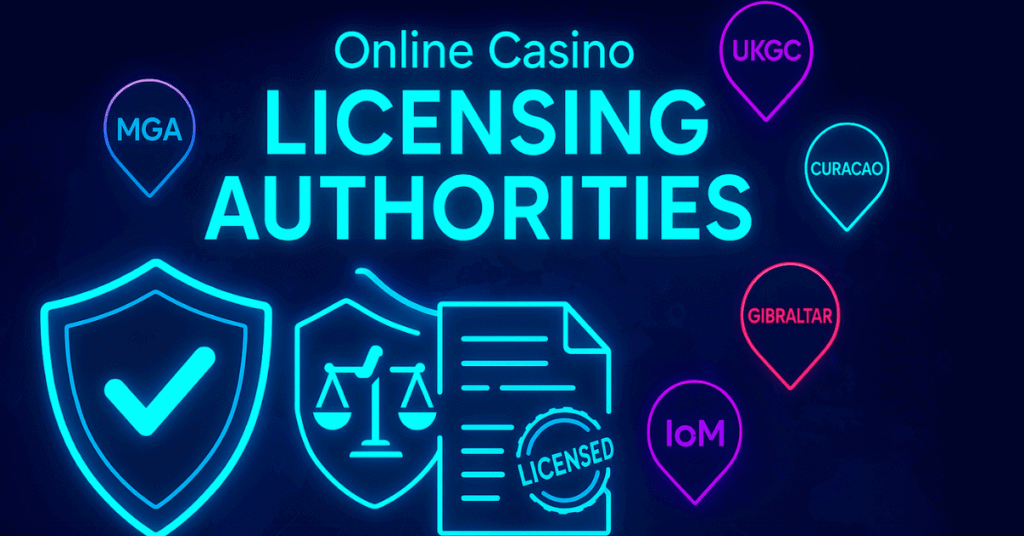
Top Online Casino Licensing Authorities in 2025: A Complete Guide

iGaming Licenses Explained: 6 Essential Facts That Keep Your Money Safe
Online Casino Licensing: How It Works
iGaming Licenses Explained is the foundational guide. It covers what an online casino licensing framework actually consists of — the application process, the ongoing compliance obligations, the technical requirements for game fairness, and the player protection standards that licensed operators must meet. If you have never thought about what a casino license means beyond the logo in the footer, this guide changes that.
Online Casino Licensing Authorities compares the major regulators side by side. It covers the Malta Gaming Authority, the UK Gambling Commission, Curaçao, Kahnawake, Gibraltar, the Isle of Man, Alderney, and Romania’s ONJN. The comparison focuses on what each authority actually requires from operators and what that means for player safety — not just which logo looks most official.
The two guides work together: the first explains the system, the second helps you evaluate which licenses offer real protection and which are mostly administrative.
Online Casino Licensing: Major Authorities
Each regulatory authority operates under different standards, fees, enforcement mechanisms, and player protection requirements. SlotDecoded publishes individual guides for the authorities that players encounter most frequently.
Malta Gaming Authority (MGA)
The MGA Online Casino License Guide covers the EU’s most established iGaming regulator. The Malta Gaming Authority licenses hundreds of online casino operators and is widely considered one of the strongest regulatory frameworks available. The guide explains MGA license types (B2C and B2B), application costs, compliance timelines, player fund segregation requirements, and the complaints process available to players through the MGA’s player support function. You can verify any MGA-licensed operator on the MGA licensee register.
UK Gambling Commission (UKGC)
The UKGC Online Casino License Guide covers the regulator with arguably the strictest enforcement in the industry. The UK Gambling Commission imposes mandatory affordability checks, strict advertising standards, a ban on certain bonus types, and aggressive penalties for non-compliance — fines regularly reach tens of millions of pounds. The guide explains what UKGC online casino licensing means for UK-facing operators and how the UK’s transition from the voluntary GambleAware model to a statutory gambling levy is reshaping the regulatory landscape.
Curaçao (CGA)
The Curaçao Online Casino License Guide covers one of the most common — and most controversial — online casino licensing jurisdictions. The former Curaçao eGaming framework was widely criticized for minimal enforcement and limited player recourse. The new Curaçao Gaming Authority (CGA), established under the National Ordinance on Games of Hazard, introduces stricter compliance requirements. The guide explains what changed, what the new framework requires, and why a Curaçao license still offers weaker player protection than MGA or UKGC.
US State Licensing
The US Online Casino Licensing Guide covers the fragmented American market where online casino licensing is regulated state by state. New Jersey, Michigan, Pennsylvania, West Virginia, Connecticut, and Delaware each have their own regulatory bodies, licensed operators, and market rules. The guide explains which states have legal online casino gambling, how to verify a US license, and what protections apply. For context on enforcement against unlicensed offshore operators targeting US players, see US Attorneys General Push Against Offshore Gambling.
Brazil
The Brazil Gambling License Guide covers one of the largest emerging online casino licensing markets in the world. Brazil’s regulatory framework is being built in real time — the guide covers the 2024 legislation, the operator application timeline, tax structure, prohibited practices, and what the framework means for international operators seeking to enter the market. With over 8,500 monthly search impressions, this is one of the highest-demand licensing topics on the site. The guide covers technical requirements, compliance deadlines, and the Ministry of Finance (Secretaria de Prêmios e Apostas) process.
Online Casino Licensing: Global Legal Status
Countries Where Online Gambling Is Legal provides a global overview of which markets have legalized and regulated online gambling, which are in the process of regulation, and which prohibit it entirely. The guide covers Europe, the Americas, Asia-Pacific, and Africa — and is regularly updated as new markets open.
This is useful for players who travel or play from multiple jurisdictions, and for anyone trying to understand why a casino is licensed in one country but not available in another. Online casino licensing is jurisdictional — an operator can be fully legal in Malta and completely banned in the Netherlands depending on whether they hold the relevant local license.
Why Online Casino Licensing Matters for Players
The practical difference between a licensed and unlicensed online casino is not abstract. It affects your experience in specific, measurable ways.
Fund protection. Licensed operators under authorities like the MGA and UKGC must segregate player funds from operational funds. If the operator goes bankrupt, your balance is protected. Unlicensed casinos have no such obligation — your deposit is at the mercy of the operator’s financial health.
Game fairness. Licensing authorities require that games are tested and certified by independent labs like eCOGRA, iTech Labs, or BMM Testlabs. This testing verifies that the RNG produces genuinely random outcomes and that the published RTP matches the actual math model. Without this oversight, there is no way to verify that a game pays what it claims. For more on how game testing works, see Are Online Slots Fair.
Dispute resolution. If you have a legitimate complaint against a licensed casino — a delayed withdrawal, a voided bonus, a frozen account — the regulatory authority provides a formal complaints process. Under the MGA, you can escalate directly to the regulator. Under the UKGC, licensed operators must participate in Alternative Dispute Resolution (ADR). Unlicensed operators offer no recourse beyond their own customer support. For context on common withdrawal disputes, see Why Is My Casino Withdrawal Pending.
Responsible gambling infrastructure. Licensed online casinos must offer deposit limits, loss limits, session time limits, cool-off periods, and self-exclusion tools. The UKGC mandates integration with GAMSTOP, the national self-exclusion scheme. The MGA requires responsible gambling training for staff and mandatory player interaction on loss-based triggers. Unlicensed casinos may offer none of this. For more on these tools, see the Responsible Gambling Guide.
Withdrawal reliability. Licensed operators face regulatory consequences for unjustified payout delays. While delays still happen — KYC processing, manual reviews, and payment method limitations are real factors — licensed casinos are incentivized to pay because their license depends on it. Unlicensed operators have no such incentive. For data on real withdrawal experiences, check the Casino Withdrawal Speed Tracker.
How to Verify Online Casino Licensing
Checking whether a casino holds a valid license takes less than two minutes. Here is how to do it for the three most common online casino licensing jurisdictions.
MGA: Go to the MGA licensee register. Search by company name or license number. If the operator appears with an active status, the license is valid.
UKGC: Go to the UKGC public register. Search by trading name or account number. Active licenses will show the permitted activities and any regulatory actions.
Curaçao: The new CGA framework is building a public register. Under the legacy system, verification was less reliable — sublicenses were common and not always publicly verifiable. If a casino claims a Curaçao license, ask for the license number and verify it directly.
If a casino displays a licensing logo but the license number does not appear in the relevant register, do not deposit. Logo placement without verifiable credentials is a common tactic used by unlicensed operators.
Online Casino Licensing and the Regulatory Landscape
Online casino licensing is not static. Markets open, authorities tighten enforcement, and new legislation reshapes what operators can and cannot do. Several developments covered on SlotDecoded reflect these shifts.
Responsible Gambling Regulation Changes in EU Markets covers the latest legislative changes affecting how licensed operators must handle player protection. GambleAware Cease Operations reports on the UK’s transition from a voluntary charity-funded model to a statutory gambling levy — a structural shift in how gambling harm services are funded. Italy’s Online Gambling Licence Deadline covered the August 2025 requirement for non-licensed operators to exit the Italian market. US Attorneys General vs Offshore Gambling documented the coordinated push by all 50 US state attorneys general for federal action against unlicensed offshore sites.
Understanding online casino licensing trends helps you anticipate which operators may face compliance pressure, which markets are becoming safer, and where new opportunities for licensed play are emerging. For operators and industry professionals, the iGaming Events section covers conferences where regulation is a key agenda item, including the Finnish iGaming Conference which focused heavily on Nordic licensing timelines.
Online Casino Licensing in Context
A license is the starting point, not the finish line. A licensed casino can still have poor bonus terms, slow withdrawals, or a limited game library. But a license ensures that the operator is accountable to a regulatory body, that the games have been independently tested, and that you have formal recourse if something goes wrong.
If you are choosing a new casino, check the license first. Use the Casino Bonus Terms Scanner to compare bonus conditions. Check the Casino Withdrawal Speed Tracker for real payout data. Read the Casino Bonus Terms Explained guide before depositing. And understand the role of casino operators vs slot providers so you know who is responsible for what.
For the full collection of casino-related guides, see the Casinos hub. For a complete introduction, the Beginner’s Handbook to Online Casinos covers everything from account creation to your first withdrawal.
Frequently Asked Questions About Online Casino Licensing
What is online casino licensing?
Online casino licensing is the process by which a regulatory authority grants an operator permission to offer real-money gambling services. The license comes with legal obligations around game fairness, player protection, anti-money laundering, responsible gambling, and financial transparency.
Which online casino licensing authority is the best?
From a player protection standpoint, the UKGC and MGA are generally considered the strongest. The UKGC has the most aggressive enforcement and the strictest rules. The MGA is the most established EU-wide framework. Curaçao is improving under the new CGA but still offers weaker protections. See Online Casino Licensing Authorities for a detailed comparison.
How do I check if a casino is licensed?
Find the license number in the casino’s footer, then verify it on the regulator’s public register. The MGA, UKGC, and Gibraltar all maintain searchable registers. If the casino does not display a license number, or the number does not appear in the register, do not deposit.
Is it safe to play at a Curaçao-licensed casino?
Safer than an unlicensed casino, but significantly weaker than playing under MGA or UKGC regulation. Curaçao’s legacy framework had minimal enforcement and limited player recourse. The new CGA is introducing stricter standards but enforcement track record is still limited. Read the Curaçao License Guide for specifics.
Can a casino lose its license?
Yes. Regulatory authorities can suspend or revoke licenses for non-compliance. The UKGC regularly issues fines, warnings, and license revocations. The MGA has also taken enforcement actions against operators who breached licensing conditions. This is one of the key reasons licensing matters — it creates real consequences for bad behaviour.
Does online casino licensing affect the RTP of games?
Indirectly, yes. Licensed operators must use certified games with verified RTP figures. Some jurisdictions restrict the minimum RTP operators can offer. However, operators can still choose between multiple RTP configurations offered by the provider. For details, see How Slot Features Affect RTP.
Every guide in this section exists because online casino licensing is the foundation of player safety — and the one thing most players never bother to check. The information takes minutes to read and can save you from depositing at an operator that has no obligation to treat you fairly.