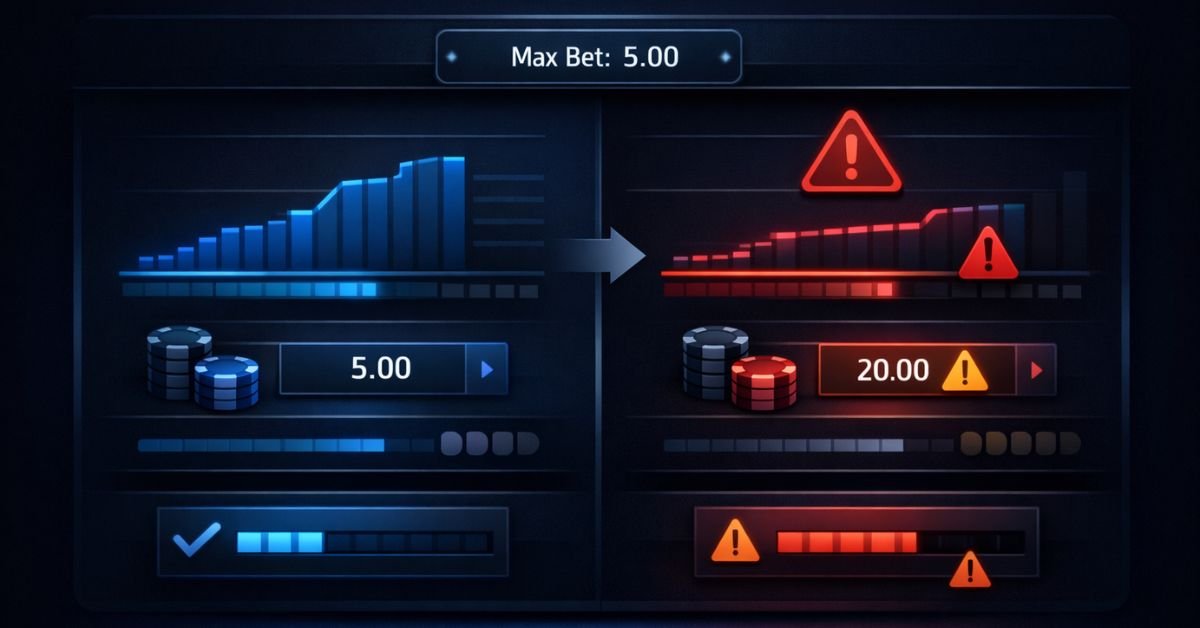
A lot of players think the hardest part of a casino bonus is the wagering requirement. In practice, one of the most dangerous rules is often much smaller, much simpler, and much easier to break by accident.
It is the max bet rule casino bonus pages hide in the terms.
A player claims a bonus, starts wagering, increases stake size without thinking too much about it, hits a strong run, completes some or all of the rollover, and then finds out the casino considers the play invalid because one or more bets exceeded the allowed limit during bonus play. At that point the problem is no longer theoretical. The issue becomes whether the operator voids bonus winnings, reverses the bonus balance, or treats the session as a breach of promotional terms.
This is why max-bet rules matter so much. They do not just reduce flexibility. They can destroy the practical value of an otherwise decent-looking bonus. And unlike some other restrictions, this one is easy to break in real play, especially on volatile slots, autoplay-heavy sessions, bonus buys, or progressive wagering attempts where the player is focused on the game, not the terms.
This guide explains what the max bet rule actually is, why casinos use it, how players break it, how it connects to wagering difficulty, what kinds of bets can trigger issues, and how to judge whether a bonus is reasonably structured or quietly designed to create risk.
If you want to compare casino bonuses intelligently, this is one of the core rules you need to understand before you deposit.
Compare max bet restrictions before you claim a bonus
Use the SlotDecoded scanner to compare max bet rules, wagering base, expiry windows, sticky terms, and overall bonus clearability.
Open the Bonus Terms Scanner →What the Max Bet Rule Actually Means
A max bet rule is a limit on how much you are allowed to stake per spin, round, or qualifying wager while a bonus is active.
That limit is usually expressed as a fixed amount such as:
- €5 max bet
- $5 max bet
- 5 USDT max bet
- the local currency equivalent
Sometimes the wording is clear. Sometimes it is not. A casino may say:
- the maximum allowed bet while the bonus is active is €5
- single bets above €5 are not permitted
- any stake above 20% of the bonus value is prohibited
- bonus-buy features are excluded during bonus wagering
However it is phrased, the idea is the same: the casino is telling you there is a ceiling on eligible wagering during the bonus period.
This is not a decorative term. It is enforceable. If the operator decides the rule was breached, the consequences can include:
- bonus cancellation
- removal of bonus winnings
- confiscation of winnings tied to invalid play
- reversal of the promotion
- forced review of the account or withdrawal
That is why this rule deserves much more attention than it gets.
Why Casinos Use Max Bet Restrictions
Casinos do not usually add a max bet rule just to make the bonus easier to read. They add it to control how efficiently players can attack bonus value.
From the operator’s perspective, the rule exists to stop players from doing things like:
- betting too aggressively while the casino still carries bonus liability
- using large stake sizes to accelerate rollover too quickly
- taking high-variance shots with bonus funds
- using bonus structures in ways the operator considers “abusive”
That does not mean every max-bet rule is unreasonable. Some are fairly standard. Some are clearly designed to keep promotional mechanics within a controlled range. The issue is that many players do not notice the rule until it becomes a problem.
From the player’s point of view, the rule matters because it changes how practical the bonus is.
A €5 cap on a long rollover is one thing. A €2 cap on a tight expiry window is something else. A max-bet rule combined with sticky balance, reduced game contribution, and deposit-plus-bonus wagering can turn a decent-looking offer into a high-friction one very quickly.
Why This Rule Matters Even When the Bonus Looks Good
Many bonus pages lead with:
- 100% up to €500
- 200 free spins
- 35x wagering
None of that tells you whether the bonus lets you play naturally.
The max-bet rule answers a more useful question:
How much freedom do you actually have while clearing this bonus?
If the answer is “not much,” then the bonus is more restrictive than the headline suggests.
How Players Break the Rule Without Noticing
This is where the max bet rule becomes dangerous.
Players do not usually break it because they are trying to game the system. They break it because normal gameplay patterns make it easy to drift past the limit.
1) They raise stakes naturally during a session
This is the most common scenario. A player starts on a compliant stake size, gets momentum, or wants to move the rollover faster, and starts increasing bet size without thinking much about the terms. One spin above the allowed level may be enough to create a problem later.
2) They use autoplay or fast sessions without monitoring every stake
Autoplay, rapid feature hunting, or switching games can create situations where the current stake is not being watched carefully enough.
3) They misunderstand what “per bet” means
Some players assume the rule is about the average session stake. It usually is not. It is often about the individual bet amount.
4) They trigger features, gambles, or side options that change the effective stake
Bonus features, gamble ladders, side bets, or additional feature toggles can complicate what the casino later considers the true stake.
5) They use bonus buys
This is a major one. Even if a slot allows a buy feature, the operator may:
- exclude bonus buys entirely
- treat them as a prohibited bet type
- treat the buy amount as an oversized stake
This is one reason bonus-buy restrictions and max-bet rules often belong in the same conversation.
6) They assume a different currency equivalent
If the rule is defined in local currency or the player is switching between currencies, they may breach the limit without realising the equivalent amount changed.
What Counts as a Bet During Bonus Play
This is where things get messy, because different casinos phrase the rule differently.
In a clean structure, the operator explains:
- the maximum stake amount
- whether it applies per round or per spin
- whether side bets or gambles count
- whether feature buys are excluded
In a weaker structure, the rule is short, vague, or disconnected from the games it affects most.
That creates ambiguity around things like:
- double-up features
- ante bet toggles
- buy bonus features
- bonus rounds with higher in-round cost
- progressive or stateful game mechanics
From a player-safety perspective, the safest assumption is this:
If the feature increases the amount effectively risked on that action, do not assume the casino will treat it kindly under bonus rules unless the terms say so clearly.
This is why clean bonus terms are valuable. A bonus is easier to trust when the operator explains the rule in plain language instead of leaving players to interpret it after the fact.
| Situation | Usually Safer | Higher Risk |
|---|---|---|
| Standard slot spin | Stake clearly below max rule | Stake raised above limit even once |
| Autoplay session | Stake locked and monitored | Changing games or stake mid-session |
| Bonus buy feature | Explicitly allowed in terms | Not mentioned or explicitly excluded |
| Side bet / gamble | Terms clearly allow it | Rule wording is vague or silent |
Why the Max Bet Rule Is More Dangerous Than It Looks
This rule is dangerous for three reasons.
1) It is easy to miss
Players often focus on the size of the bonus and the wagering requirement. A max-bet limit does not sound dramatic until it starts interfering with how they normally play.
2) It is easy to breach accidentally
You do not need a long pattern of “abuse” to create an issue. A single over-limit bet can be enough if the operator chooses to enforce the rule strictly.
3) It becomes a dispute point later, not at the moment of play
This is one of the biggest problems. The casino usually does not stop the player in real time and say, “You have just invalidated your bonus.” The issue often appears later:
- during bonus review
- when the player tries to withdraw
- when the operator audits the session
That makes the rule feel much harsher because the player may only learn it mattered after they believed the session had gone well.
In other words, the max-bet rule is not just restrictive. It is retrospectively dangerous.
Fair Max Bet Rule vs Trap-Style Max Bet Rule
Not all max-bet restrictions are equally bad.
A more reasonable max-bet rule
- is clearly disclosed
- uses a sensible amount
- explains what counts as a bet
- states how feature buys are treated
- does not create obvious ambiguity
That does not make the bonus amazing. It just makes the rule cleaner and easier to respect.
A trap-style max-bet rule
- is buried or vaguely phrased
- uses a very low stake ceiling
- sits alongside high wagering and short expiry
- fails to explain feature-buy treatment
- creates room for retroactive disputes
The difference matters because some max-bet rules are just a restriction. Others feel more like a booby trap inside the promotion.
For example:
- €5 max bet on a moderate bonus can be workable
- €2 max bet on a heavy rollover with a 7-day expiry is much more aggressive
- a vague rule combined with excluded feature mechanics is even worse
That is why max-bet rules should not be judged alone. They should be read as part of the full restriction stack.
A low stake cap changes the whole bonus
Compare max bet limits alongside expiry, sticky structure, and wagering base to see how restrictive a bonus really is.
Compare Restrictive Terms →What to Check Before Claiming a Bonus
If you want to protect yourself from this rule, use this quick checklist.
- Find the exact max-bet amount
- Check the currency
- Check whether it applies during all bonus stages
- Check whether free-spin winnings create a new restriction phase
- Check whether bonus buys are excluded
- Check whether side bets or gamble features are covered
- Check whether the rule is tied to the bonus or to the account state generally
- Check the expiry window
- Check the wagering base
- Ask whether the rule still allows natural gameplay
If the answer to the last question is no, the offer is more restrictive than the headline suggests.
How the SlotDecoded Scanner Helps
The SlotDecoded Casino Bonus Terms Scanner is useful here because max-bet rules rarely matter on their own. They matter in combination with the rest of the bonus structure.
The tool helps surface:
- max-bet limits
- wagering requirement
- wagering base
- sticky or non-sticky structure
- time limit
- cashout caps
- evidence confidence based on public source quality
That makes it easier to compare offers in a way casino landing pages usually do not.
A bonus with moderate rollover and no nasty stake cap may be much more usable than a “bigger” bonus with a restrictive max-bet rule. The scanner helps expose that difference faster.
Want fewer hidden bonus traps?
Use the scanner to spot offers where max-bet rules, expiry, and rollover combine into a much heavier promotion than the headline suggests.
Open the Scanner →How to Use This Rule Before You Deposit
The best time to think about the max-bet rule is before you claim the bonus, not after you win.
That means:
- do not treat the rule as minor fine print
- check whether the stake limit fits how you actually play
- avoid assuming bonus buys or side features are safe unless clearly allowed
- judge the max-bet rule together with expiry and wagering base
- be cautious when the terms are vague
If the max-bet rule is low, unclear, or stacked on top of already heavy rollover conditions, the bonus may not be worth touching at all.
This is exactly the type of restriction SlotDecoded is built to decode: the kind that does not look dramatic on the headline, but changes the whole value of the offer once you read it properly.
Related SlotDecoded Guides
- Casino Bonus Terms Explained: How to Read an Offer Before You Deposit
- Bonus Only vs Deposit and Bonus Wagering: Which Is Better?
- Sticky vs Non-Sticky Bonuses: The Difference That Changes Your Cashout
- What Is Max Cashout in a Casino Bonus?
- Game Contribution Rates Explained: Why 100% Slots and 0% Tables Matter
- Casino Bonus Terms Scanner
Useful External Resources
Frequently Asked Questions — Max Bet Rule Casino Bonus
What is a max bet rule in a casino bonus?
A max bet rule is a limit on how much you can stake per spin, round, or qualifying wager while a bonus is active. If you exceed it, the casino may treat the bonus play as invalid.
Can a casino void winnings because of the max bet rule?
Yes. Many casinos reserve the right to remove bonus winnings, reverse the bonus, or void related wins if they decide the rule was breached.
Is the max bet rule always clearly stated?
No. Some casinos explain it plainly, while others bury it in the bonus terms or phrase it in a way that creates ambiguity around what counts as an over-limit bet.
Do bonus buys count against the max bet rule?
Often yes, or they may be excluded entirely. You should never assume bonus buys are allowed during bonus play unless the terms state that clearly.
Is a €5 max-bet rule normal?
It is common, but whether it is reasonable depends on the rest of the offer. A €5 rule on a moderate bonus can be workable. A tighter rule combined with heavy rollover and short expiry is far more restrictive.
Why is this rule so easy to break?
Because players often increase stakes naturally during play, use autoplay, switch games, or trigger features without monitoring every stake level against the bonus terms.
How can I avoid problems with max-bet rules?
Check the exact limit before you play, keep your stake clearly below it, avoid unclear feature use during bonus play, and compare the rule with the rest of the bonus structure before depositing.